
Overview
When people finish a great book, they often want to talk about it. They want to compare interpretations, hear different perspectives, and relive memorable moments with others. Yet Audible's listening experience ends when the final chapter does.
I wondered: What if discussion became part of the listening experience instead of something users had to organize on their own?
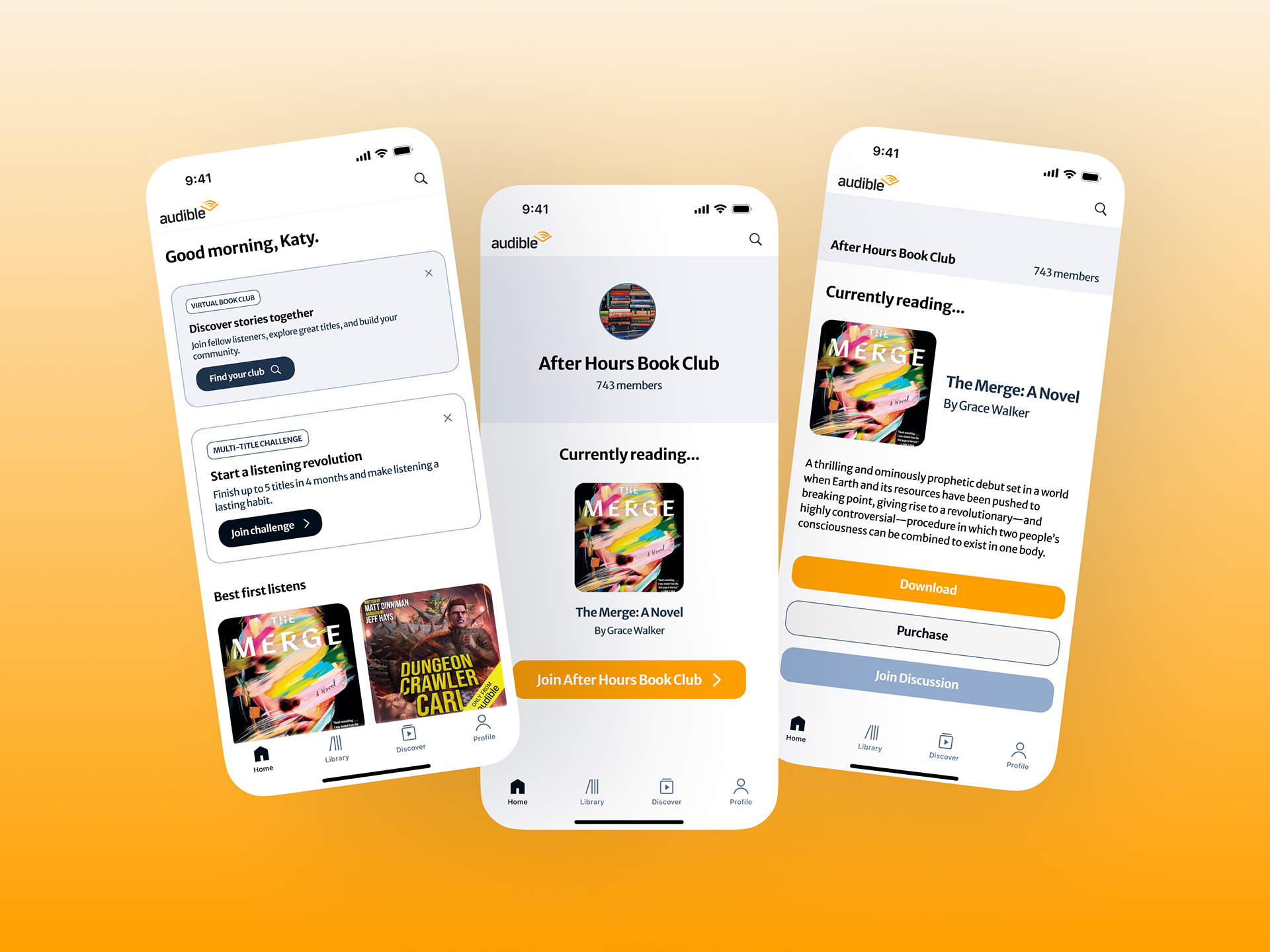
Over the course of eight weeks, I designed a Virtual Book Club feature that brings flexible, asynchronous conversations directly into Audible. Rather than recreating traditional book clubs, I focused on removing the barriers that keep people from joining them in the first place.
Understanding the Problem
My initial assumption was simple: people weren't participating in book clubs because they didn't have enough time.
User interviews quickly challenged that assumption.
Participants consistently told me they loved discussing books. What they disliked wasn't the conversation—it was everything surrounding it.
They worried about falling behind. They didn't want to commit to recurring meetings. Many felt anxious about letting a group down if life became busy.
The problem wasn't a lack of interest.
It was the pressure that came with participation.
That insight shifted the direction of the project. Instead of asking, How can Audible build a book club? I began asking:
User interviews quickly challenged that assumption.
Participants consistently told me they loved discussing books. What they disliked wasn't the conversation—it was everything surrounding it.
They worried about falling behind. They didn't want to commit to recurring meetings. Many felt anxious about letting a group down if life became busy.
The problem wasn't a lack of interest.
It was the pressure that came with participation.
That insight shifted the direction of the project. Instead of asking, How can Audible build a book club? I began asking:
How might we create a discussion experience that feels as flexible as listening to an audiobook?
Research
To better understand the opportunity, I conducted user interviews, competitive analysis, and affinity mapping.
One finding stood out.
People wanted conversation on their own terms. They wanted to contribute when they had something to say—not because a meeting was scheduled.
Another surprising insight was that many potential participants primarily read physical books or Kindle editions rather than audiobooks. That suggested the opportunity extended beyond Audible's existing audience. Any community feature would need to support different reading habits while keeping participation effortless.
Across all the research, one pattern became clear:
People weren't avoiding community.
They were avoiding commitment.
One finding stood out.
People wanted conversation on their own terms. They wanted to contribute when they had something to say—not because a meeting was scheduled.
Another surprising insight was that many potential participants primarily read physical books or Kindle editions rather than audiobooks. That suggested the opportunity extended beyond Audible's existing audience. Any community feature would need to support different reading habits while keeping participation effortless.
Across all the research, one pattern became clear:
People weren't avoiding community.
They were avoiding commitment.
User Interviews
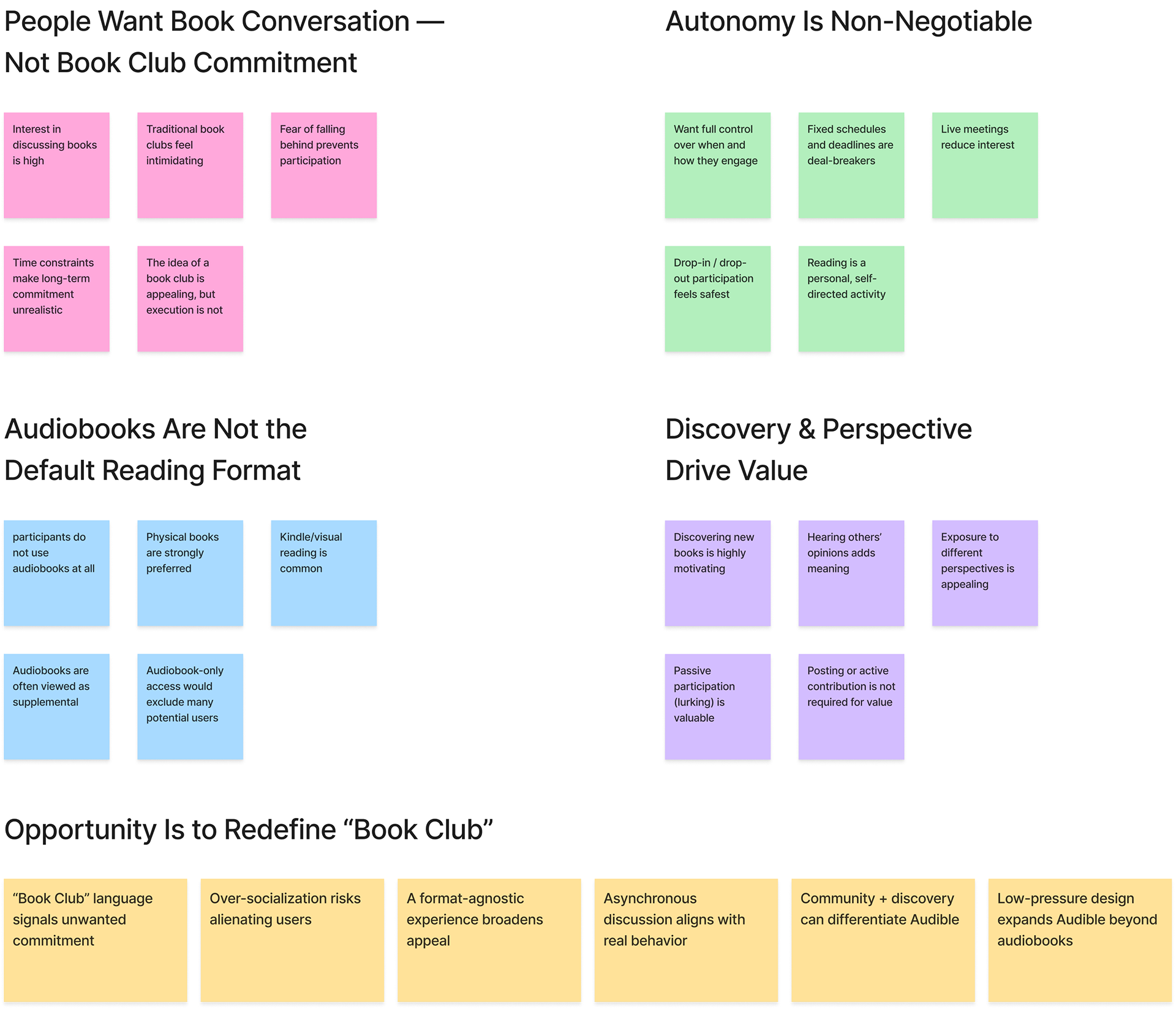
Interview themes revealed that users wanted discussion but avoided the pressure of traditional book clubs.
Competitive Analysis




Existing platforms supported discussion, but none integrated conversation seamlessly into audiobook listening.
Key Insight
"People weren't avoiding community—they were avoiding commitment."
This insight became the foundation for every design decision that followed.
Turning Insights into Design
That insight became the foundation for every design decision.
I established three principles to guide the experience.
First, participation should always feel optional. Users could browse conversations without posting and contribute only when they felt comfortable.
Second, discussions should follow reading progress instead of a calendar. Organizing conversations by chapter allowed members to participate at their own pace while naturally reducing spoilers.
Finally, discussion needed to feel like an extension of listening—not a separate destination. Community features were integrated into existing moments throughout the Audible experience rather than requiring users to switch contexts.
I established three principles to guide the experience.
First, participation should always feel optional. Users could browse conversations without posting and contribute only when they felt comfortable.
Second, discussions should follow reading progress instead of a calendar. Organizing conversations by chapter allowed members to participate at their own pace while naturally reducing spoilers.
Finally, discussion needed to feel like an extension of listening—not a separate destination. Community features were integrated into existing moments throughout the Audible experience rather than requiring users to switch contexts.
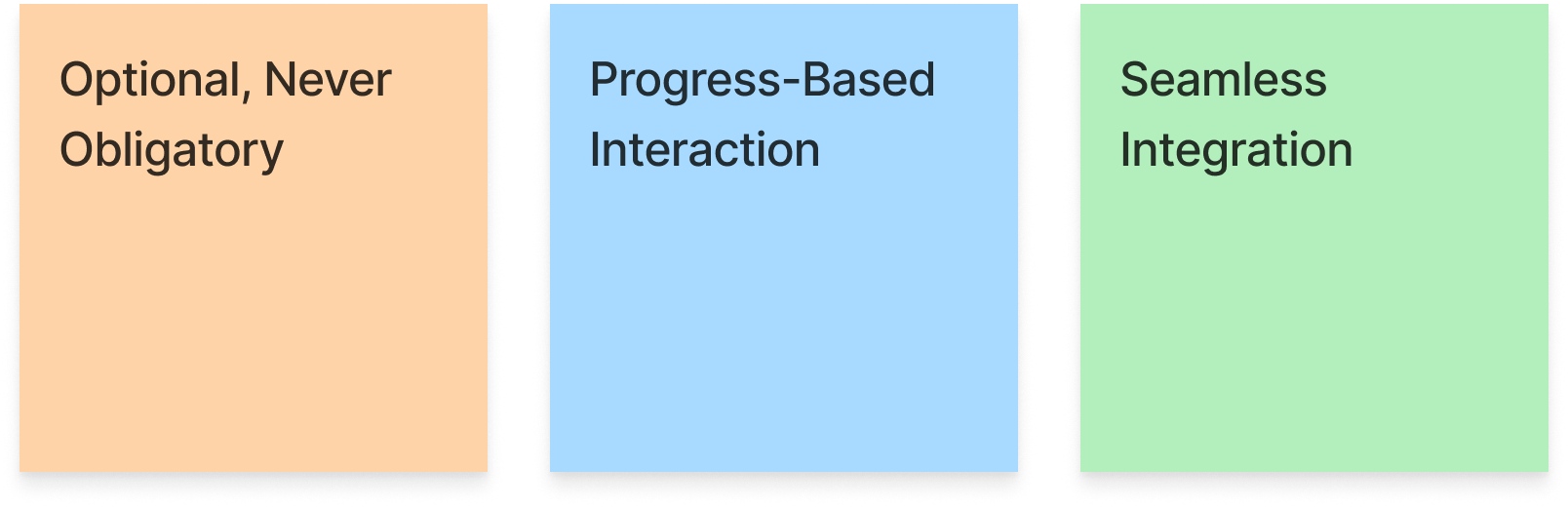
These principles became the framework for evaluating every feature.
Designing the MVP
Rather than designing an expansive social platform, I intentionally focused on the smallest experience that could validate the concept.
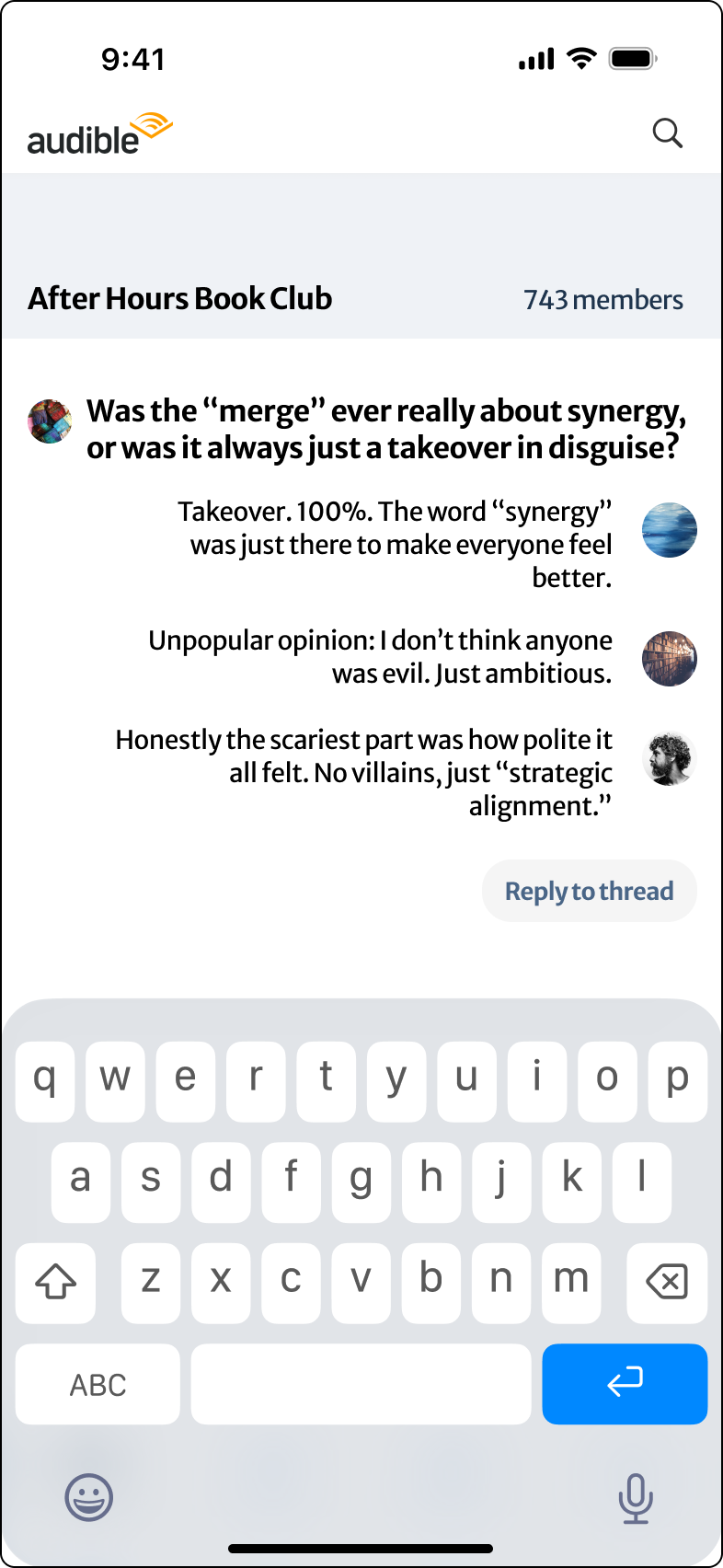
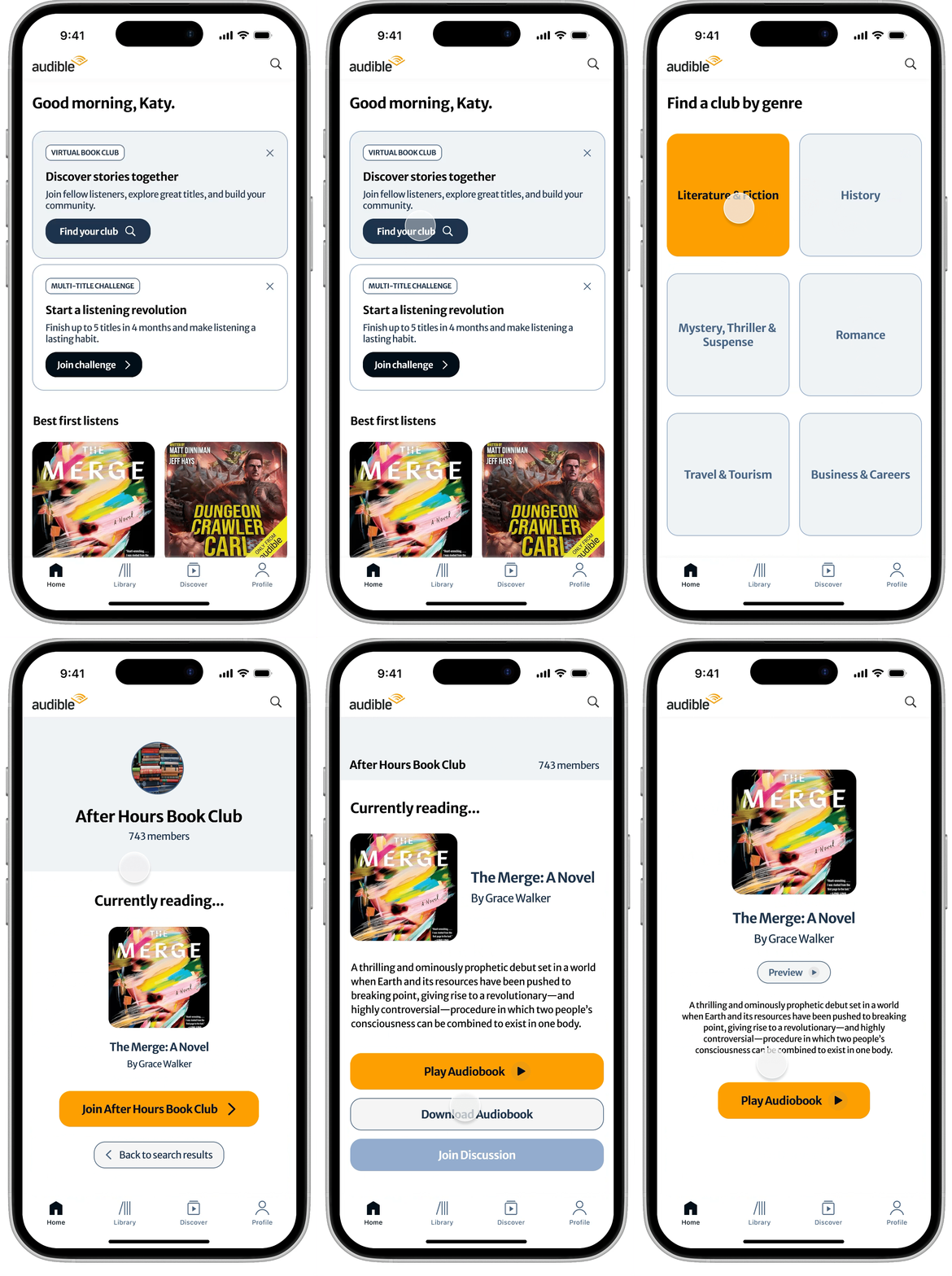
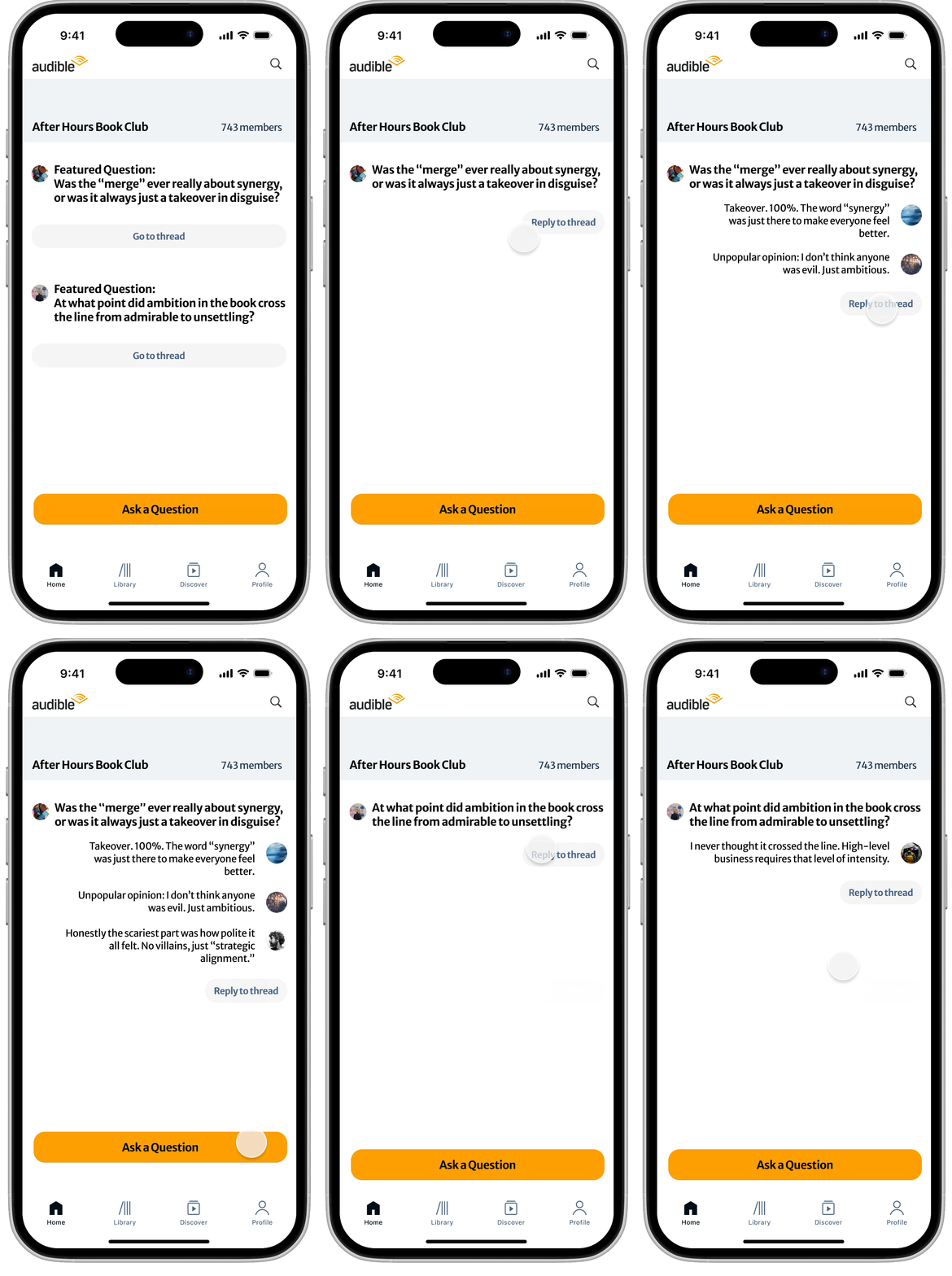
The MVP allowed users to discover or create book clubs, participate in chapter-based discussions, react to comments, and receive optional notifications that encouraged them to rejoin conversations.
Every feature had to answer one question:
The MVP allowed users to discover or create book clubs, participate in chapter-based discussions, react to comments, and receive optional notifications that encouraged them to rejoin conversations.
Every feature had to answer one question:
Does this reduce friction or create it?
If it introduced unnecessary complexity, it didn't make the first release.
Rather than building every possible social feature, I identified the smallest experience that could validate the idea.
MVP Diagram

The MVP focused on supporting the natural listening journey instead of introducing a separate social experience.
Learning Through Iteration
Usability testing confirmed many of the core ideas but also revealed opportunities to simplify.
Early onboarding asked users to make several decisions before joining a club. Participants hesitated, unsure of what they were committing to.
By streamlining onboarding and emphasizing that participation was optional, users felt much more comfortable joining discussions.
Testing also uncovered confusion between the concepts of "Book Clubs" and "Discussion Threads." Refining the terminology and information architecture made navigation feel more intuitive.
Perhaps the biggest design decision was choosing what not to build. Rich profiles, private messaging, and additional social features were intentionally postponed so the MVP could stay focused on validating asynchronous discussion.
Early onboarding asked users to make several decisions before joining a club. Participants hesitated, unsure of what they were committing to.
By streamlining onboarding and emphasizing that participation was optional, users felt much more comfortable joining discussions.
Testing also uncovered confusion between the concepts of "Book Clubs" and "Discussion Threads." Refining the terminology and information architecture made navigation feel more intuitive.
Perhaps the biggest design decision was choosing what not to build. Rich profiles, private messaging, and additional social features were intentionally postponed so the MVP could stay focused on validating asynchronous discussion.
Outcome
The final concept transforms Audible from a place where people consume books into one where they can also share the experience of reading them.
Instead of asking users to fit their lives around a book club, the Virtual Book Club adapts to the way they already listen—at their own pace, on their own schedule, and without the pressure of keeping up.
More importantly, the project demonstrated that meaningful social experiences don't necessarily come from adding more features.
Sometimes they come from removing the barriers that keep people from participating in the first place.
Instead of asking users to fit their lives around a book club, the Virtual Book Club adapts to the way they already listen—at their own pace, on their own schedule, and without the pressure of keeping up.
More importantly, the project demonstrated that meaningful social experiences don't necessarily come from adding more features.
Sometimes they come from removing the barriers that keep people from participating in the first place.
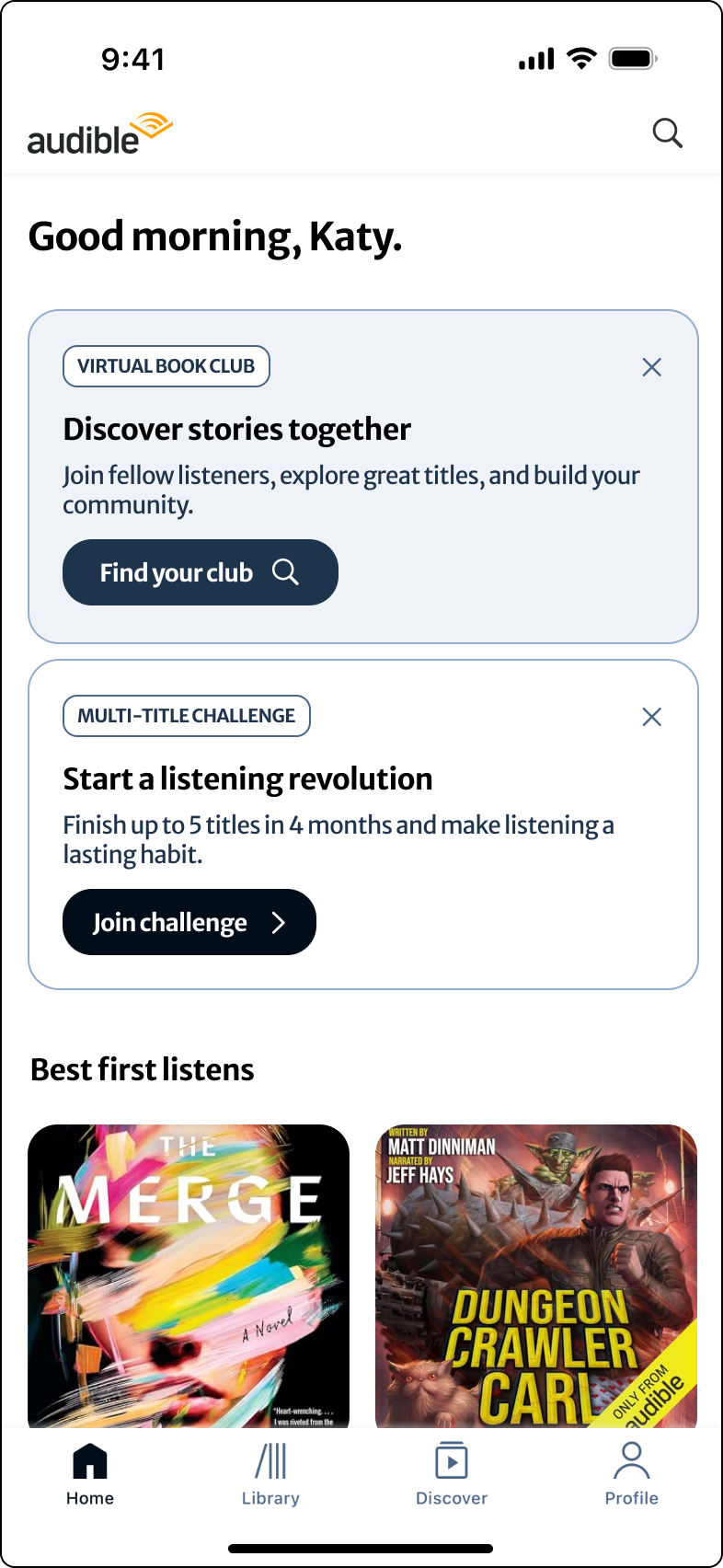
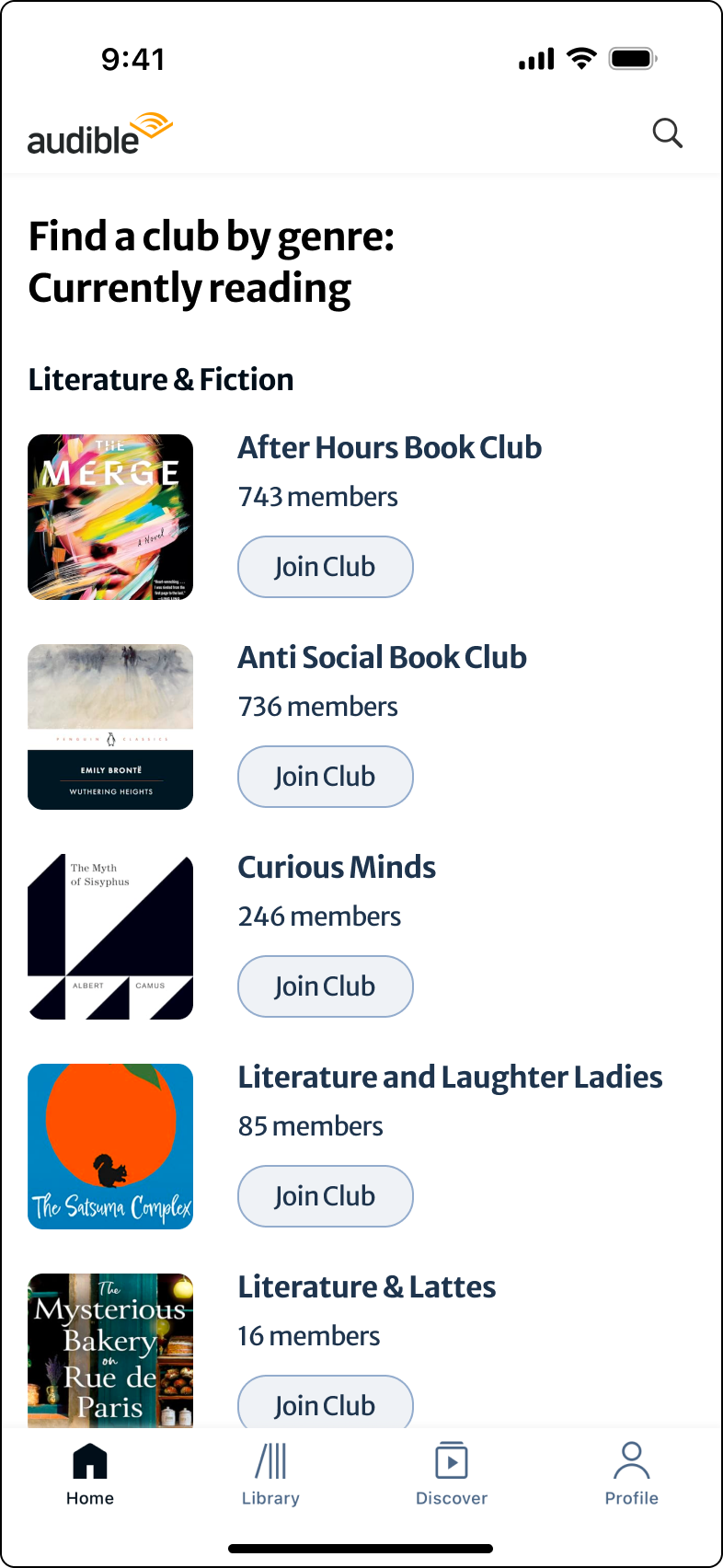
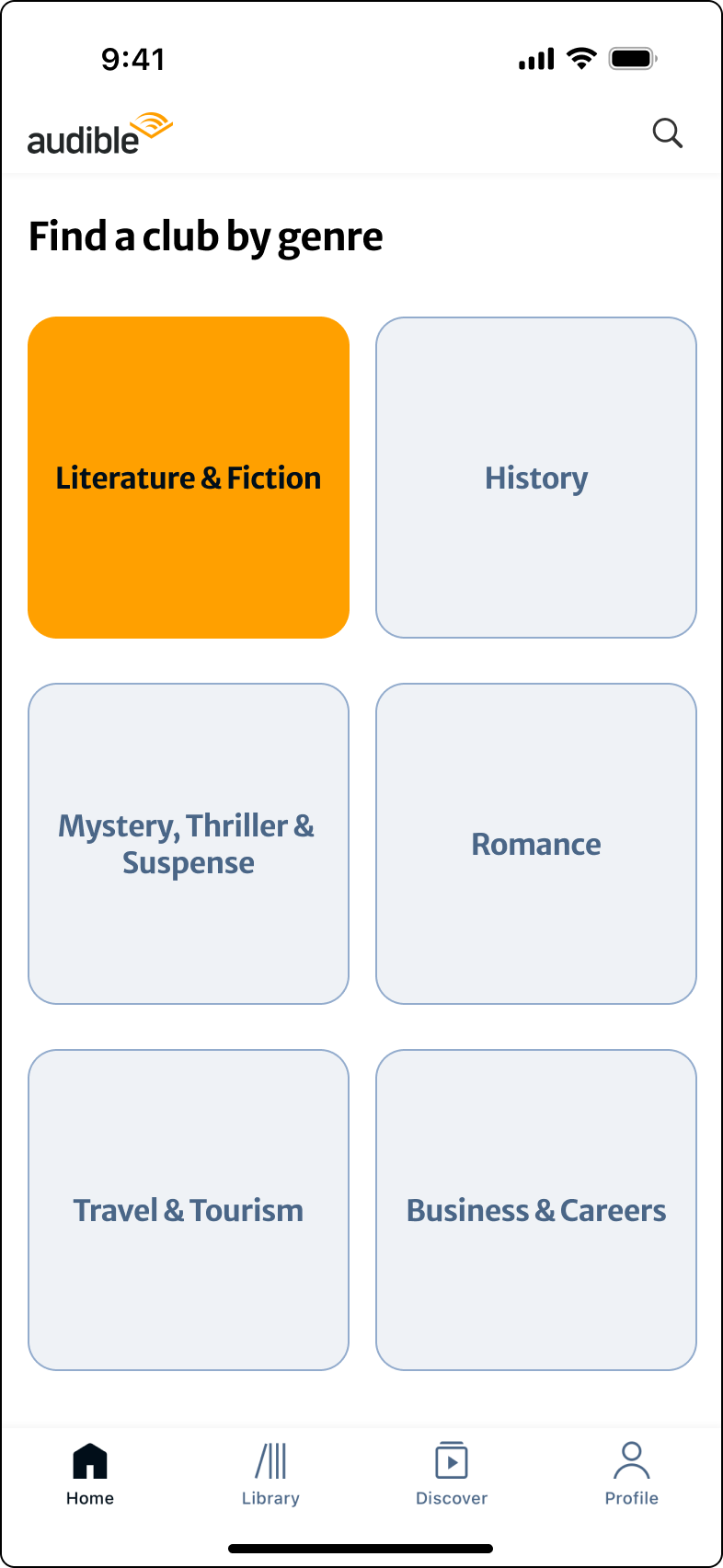
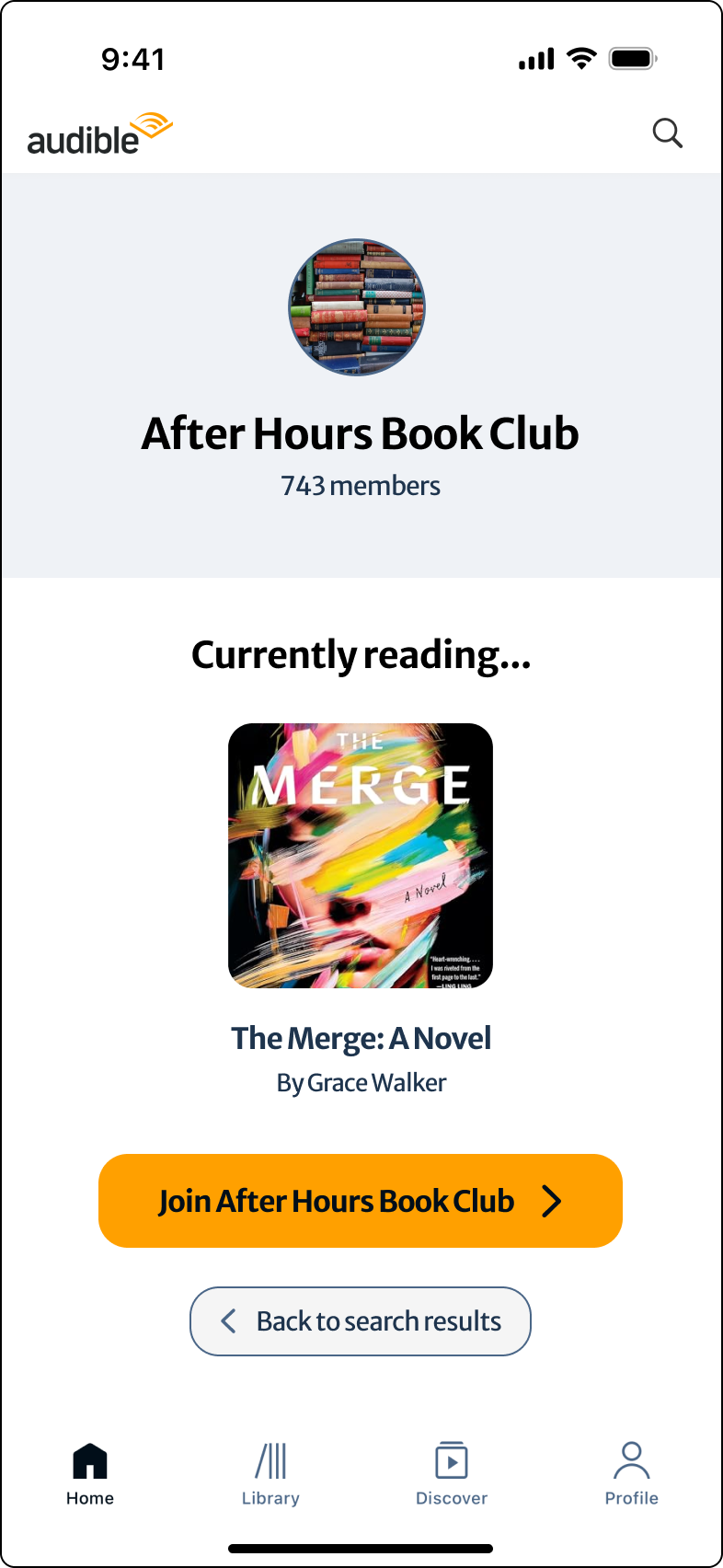
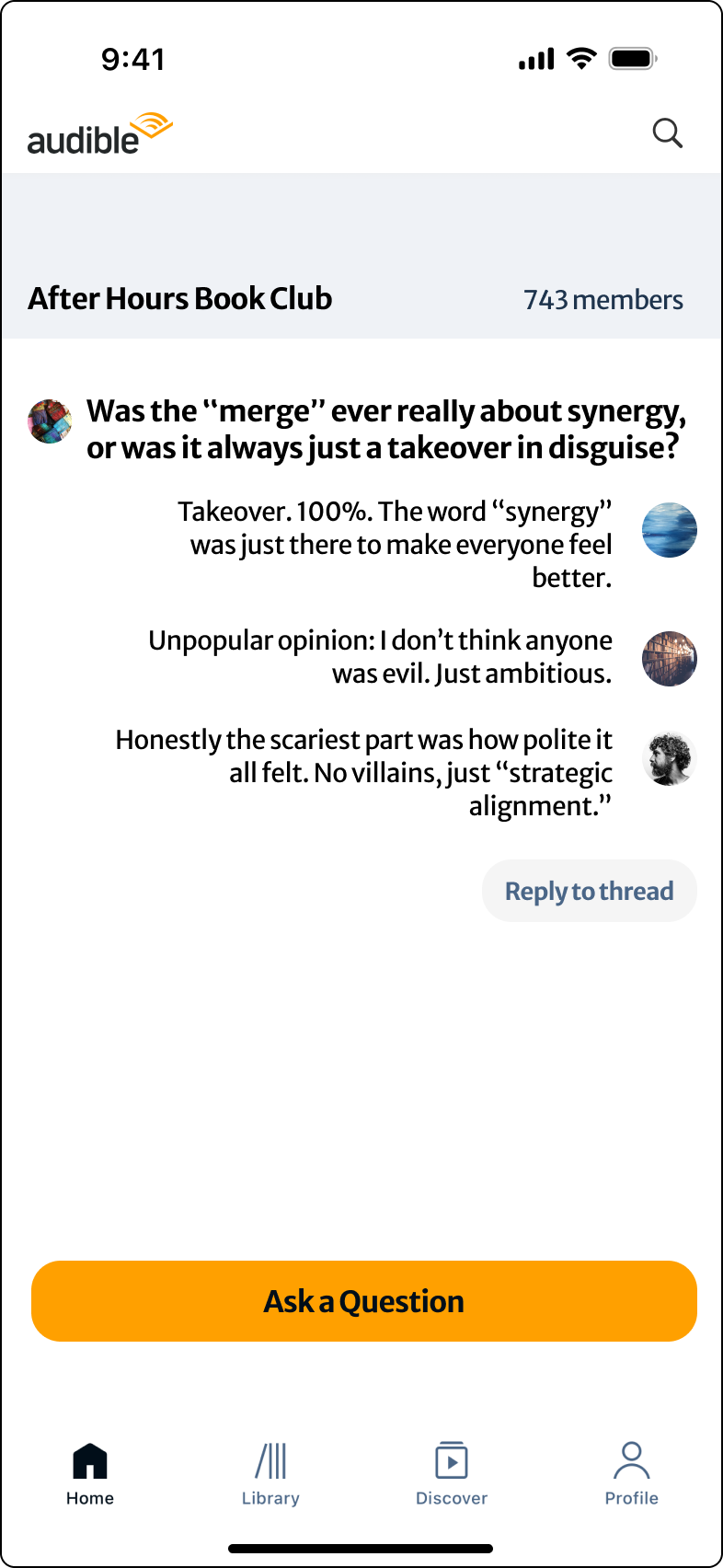
Join a club
Messaging in book club audiobook
Reflection
This project changed how I think about social design.
I began by trying to design a better book club. I finished by realizing the real challenge wasn't creating conversation—it was reducing anxiety.
That shift influenced every decision I made, from organizing discussions by chapter to making participation completely optional.
It also reinforced an important lesson I'll carry into future projects: successful social products don't encourage engagement by asking more of users. They succeed by respecting users' time, reducing pressure, and fitting naturally into existing behaviors.
I began by trying to design a better book club. I finished by realizing the real challenge wasn't creating conversation—it was reducing anxiety.
That shift influenced every decision I made, from organizing discussions by chapter to making participation completely optional.
It also reinforced an important lesson I'll carry into future projects: successful social products don't encourage engagement by asking more of users. They succeed by respecting users' time, reducing pressure, and fitting naturally into existing behaviors.